
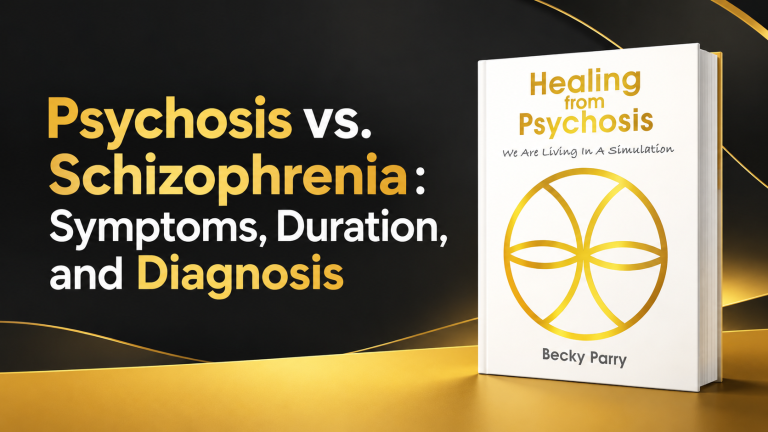
Two mental-health terms can sound closely connected without meaning the same thing. That is exactly why conversations about psychosis vs schizophrenia can become confusing. Someone may experience psychosis without having schizophrenia, while a person diagnosed with schizophrenia may experience psychotic symptoms as one part of a much broader condition.
Understanding that distinction matters. It can reduce unnecessary fear, make conversations with health professionals clearer, and help families understand why a person’s diagnosis may change as clinicians learn more about their symptoms over time.
Psychosis describes a collection of symptoms involving some loss of contact with shared reality. Schizophrenia, by comparison, is a specific mental-health condition that can include psychosis alongside other changes in thinking, motivation, emotion, and everyday functioning.
Start With the Simplest Distinction
Think of psychosis as an experience or state rather than automatically as a lifelong diagnosis.
A psychotic episode can involve hallucinations, strongly held beliefs that others do not share, or thinking and speech that become difficult to organize.
Schizophrenia is different because it describes a diagnosed disorder with a wider pattern of symptoms.
A useful way to remember the distinction is
- Psychosis can occur in several different conditions.
- Schizophrenia is one condition in which psychosis may occur.
- One psychotic episode does not automatically mean schizophrenia.
- A diagnosis requires more than noticing a single unusual experience.
- The cause, pattern, duration, severity, and impact of symptoms all matter.
That is the central difference between psychosis and schizophrenia.
Why People Confuse the Two
The confusion makes sense because the conditions overlap.
Someone with schizophrenia may hear voices or experience delusions. Those same experiences can also occur in bipolar disorder, severe depression, some physical illnesses, after certain substances, or under other circumstances.
Psychosis, therefore, does not tell you the entire reason someone is having those symptoms.
How long it lasts and whether it returns can depend partly on the underlying cause.
This is why a person searching for something as brief as schizo vs psychosis is really asking a much bigger question:
Is psychosis the illness itself, or is it a symptom of something else?
The answer depends on the individual.
What Psychosis Can Look and Feel Like
Clinical descriptions often sound neat on a webpage.
Real life rarely does.
Common psychosis symptoms can include hearing voices, seeing things other people do not see, feeling that ordinary events carry a special meaning, developing intense beliefs that others cannot verify, or experiencing thoughts that move so rapidly that conversation becomes hard to follow.
One of the most important things to understand is that these experiences can feel completely real to the person having them.
That point comes through strongly in Becky Parry‘s memoir, Healing from Psychosis: We Are Living in a Simulation. Becky explains that the book grew from a diary she used to process pain, suffering, trauma, and her experiences following psychosis. She also makes clear that the book records her personal interpretation of what happened to her.
That distinction matters when reading any lived-experience account.
A person’s fear, memories, emotions, and distress can be deeply real even when clinicians interpret the cause differently.
Schizophrenia Includes More Than Psychosis
Schizophrenia is often reduced in popular culture to hallucinations or hearing voices.
That is incomplete.
The condition can include psychotic symptoms alongside changes in motivation, emotional expression, social interaction, concentration, memory, organization, and other areas of everyday functioning.
This broader picture is important when discussing schizophrenia symptoms because two people with the same diagnosis may have very different day-to-day experiences.
One person may struggle mainly during acute episodes but function well between them.
Another may continue experiencing difficulties with motivation or social connection even when prominent hallucinations or delusions have improved.
A diagnosis therefore cannot be understood by looking at one symptom in isolation.
Psychotic Episode vs. Schizophrenia: Why Time Is Only Part of the Story
A common assumption is that a psychotic episode simply becomes schizophrenia after a fixed number of days.
Diagnosis does not work that neatly.
When considering psychotic episode vs schizophrenia, clinicians look at the overall pattern.
They consider:
- What symptoms are occurring?
- How long they have been present
- Whether significant mood symptoms are involved
- Whether substances could explain them
- Whether a medical condition could be contributing
- How work, relationships, self-care, and daily life have changed
There is no single blood test that confirms schizophrenia.
Diagnosis normally depends on detailed psychiatric assessment and consideration of alternative explanations.
That is why early labels can sometimes change.
A person may initially be described as experiencing psychosis because clinicians are addressing what is happening at that moment.
Over time, additional information may point toward schizophrenia, bipolar disorder, schizoaffective disorder, severe depression with psychotic features, a substance-related condition, or another explanation.
The label can become more specific as the clinical picture develops.
Becky Parry’s Story Shows Why Terminology Can Feel Complicated
This aspect is particularly relevant to Becky’s manuscript.
She explains that she often refers to psychosis and schizophrenia because those terms are better known but says her actual diagnosis is schizoaffective disorder. She also describes feeling that the clinical explanation does not fully represent her own understanding of her experiences.
Her account should not be treated as a diagnostic template for somebody else.
Its value lies elsewhere.
It shows what it can feel like to be the person behind a diagnosis.
A clinician may be considering symptoms, risk, treatment, medication, and diagnostic criteria.
The person receiving the diagnosis may simultaneously be thinking:
What does this mean about me?
Will people treat me differently?
Will my friends be frightened?
Will I always be ill?
Can I still work?
Will anyone understand what happened?
Those questions cannot be answered by diagnostic terminology alone.
Where Schizoaffective Disorder Fits
Schizoaffective disorder adds another layer because it involves psychotic symptoms alongside significant mood episodes.
That does not make it simply “half schizophrenia and half a mood disorder.”
Diagnosis depends heavily on how different symptoms relate to each other over time.
This is another reason internet symptom lists have limits.
A person can recognize parts of themselves in several conditions without meeting the clinical criteria for any one of them.
A specialist needs to understand the sequence and timing of symptoms rather than simply count them.
The same principle applies to bipolar disorder, depression with psychotic features, and several other conditions.
Does a Schizophrenia Diagnosis Mean Recovery Is Impossible?
No.
Schizophrenia can be serious and persistent, but that does not mean every person’s future follows the same path.
Treatment may include medication, psychological therapy, family support, community mental health care, help returning to work or education, and practical assistance.
Recovery may also mean different things to different people.
For one person, recovery may involve long periods without psychotic symptoms.
For another, it may mean learning to manage occasional symptoms while still building relationships, working, studying, travelling, parenting, creating, or pursuing personal goals.
The word “recovery” should not be limited to “every symptom disappears forever.”
Why Early Assessment Matters
When reality begins to feel noticeably different, waiting for absolute certainty can delay useful support.
Professional assessment becomes particularly important when someone:
- begins hearing or seeing things other people do not
- develops intense beliefs that are causing fear or unsafe behavior
- becomes increasingly confused or disorganized
- stops sleeping for prolonged periods
- rapidly withdraws from ordinary routines
- cannot manage basic daily tasks
- becomes at risk of harming themselves or somebody else
The aim of assessment is not simply to attach a label.
It is to understand what is happening and determine what support is needed.
What Treatment Can Involve
Treatment depends on the underlying condition and individual circumstances.
For psychosis, care may include medication, talking therapies, family involvement, social support, and practical help.
A person who has experienced a first episode may also need help returning to work or education.
Someone dealing with long-term symptoms may need community support.
Others may require only a shorter period of treatment and monitoring.
This variety is another reason psychosis should not automatically be equated with schizophrenia.
Why Diagnosis Can Feel Frightening
Psychiatric language carries a great deal of cultural baggage.
People hear the word “schizophrenia” and may immediately think of frightening portrayals from films or news reports.
That stigma can sometimes hurt almost as much as the symptoms themselves.
A person may begin hiding their diagnosis.
They may worry that new friends will leave.
They may fear employers finding out.
They might hesitate before entering a relationship.
Becky’s manuscript reflects this fear. She describes struggling with the idea that other people might judge her differently after hearing about her diagnosis, which adds another emotional burden to recovery.
This is why careful language matters.
A Diagnosis Is Not a Complete Description of a Person
One of the easiest mistakes to make is turning a medical word into someone’s entire identity.
A person is not “a psychosis.”
They are not only “a schizophrenic.”
They may be a parent, friend, employee, artist, neighbor, partner, student, traveler, animal lover, writer, gardener, or any combination of these things.
Mental illness may influence life.
It does not contain the whole person.
This becomes particularly important during recovery because people often grieve the identity they believe they have lost.
They may remember how confident they were.
How independent.
How socially active.
How productive.
Recovery can involve learning that illness changed part of life without erasing everything that made them themselves.
What Families Should Remember
If someone close to you begins experiencing psychosis, you do not need to diagnose them yourself.
More useful actions include listening calmly, taking distress seriously, encouraging professional assessment, and paying attention to safety.
Aggressively arguing about whether an experience is real may not help when somebody is frightened or overwhelmed.
You can acknowledge emotion without confirming something you cannot verify.
For example:
“That sounds frightening. I want to help you feel safe.”
That can be more useful than turning the moment into a debate.
Respect Does Not Mean Agreeing With Everything
This distinction is important.
Suppose somebody says that a television presenter is communicating directly with them.
You do not have to say:
“Yes, that is definitely happening.”
You also do not need to laugh or tell them they are ridiculous.
A respectful middle position might be
“I don’t experience that myself, but I can see that it feels very real to you.”
Then focus on practical questions.
Have they slept?
Are they frightened?
Do they feel safe?
Are they being told to do anything dangerous?
Can they speak with their doctor or mental health team?
Why One Person’s Story Cannot Diagnose Another
Lived-experience writing can be incredibly valuable.
It can also create accidental self-diagnosis.
A reader recognizes one experience and thinks:
“That happened to me, so I must have the same disorder.”
Mental health diagnosis is not that simple.
Two people can hear voices for different reasons.
Two people can experience paranoia under different conditions.
Two people can have severe insomnia and arrive at very different diagnoses.
Personal narratives can help readers feel less alone.
They should not replace professional assessment.
The Language May Change, but the Person Remains
A person may be told at different points that they have:
psychosis
first-episode psychosis
schizophrenia
schizoaffective disorder
bipolar disorder
or another condition.
That can feel unsettling.
But diagnostic refinement does not mean somebody’s earlier suffering was unreal.
It may simply mean clinicians now have more information.
A psychiatric diagnosis is a working framework for understanding symptoms and planning care.
It should help the person receive useful support.
It should not become a verdict on their worth.
The Bottom Line
Psychosis and schizophrenia are closely related but not interchangeable.
Psychosis describes symptoms that can happen for several different reasons.
Schizophrenia is a specific condition involving a wider pattern that may include psychotic symptoms alongside changes in motivation, emotion, cognition, and functioning.
A single unusual experience does not establish a diagnosis.
Neither does an online symptom list.
A proper assessment considers the whole person, the timeline, possible causes, mood, physical health, substances, everyday functioning, and the way symptoms develop over time.
Most importantly, somebody’s most difficult episode should not be used to define the rest of their life.
For questions about the memoir or Becky’s work, contact Becky Parry.
FAQs
Can someone have psychosis without schizophrenia?
Yes. Psychosis can occur in several circumstances and conditions. Experiencing psychosis does not automatically mean somebody has schizophrenia.
Does one psychotic episode mean you will develop schizophrenia?
No. Some people experience one episode and never have another. Others later receive a more specific diagnosis depending on the pattern and cause of their symptoms.
Is hearing voices enough for a schizophrenia diagnosis?
No. Hearing voices can occur in different situations. Diagnosis considers the wider symptom pattern, duration, context, and effect on everyday functioning.
Can schizophrenia improve with treatment?
Yes. Symptoms and functioning can improve substantially with appropriate treatment and support, although the course varies between individuals.
Who should diagnose schizophrenia?
A qualified mental health professional should carry out the assessment. Diagnosis requires a detailed evaluation and consideration of other possible explanations.